The Importance of Discussing Family History of Cancer
Understanding your family history of cancer is a vital step in cancer prevention, early detection, and effective treatment. Many cancers

(All Locations)
Wednesday, Nov. 25: 8 AM – 5 PM Thursday, Nov. 26: Closed Friday, Nov. 27: Closed
Thursday, Dec. 24: 8 AM – 4 PM Friday, Dec. 25: Closed
Thursday, Dec. 31: 8 AM – 5 PM Friday, Jan. 1: Closed
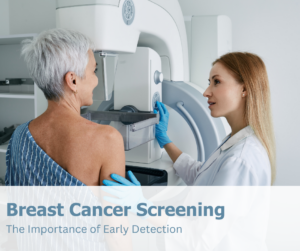
October is Breast Cancer Awareness Month, and there’s no better time to discuss one of the most crucial factors in beating this disease: early detection through screening. Regular screenings can dramatically increase the chances of catching breast cancer in its early stages when it’s most treatable.
Why Early Detection Matters
Breast cancer is one of the most common cancers affecting women, but it can often be treated successfully when caught early. Detecting cancer before it spreads can lead to more effective treatment options, less invasive procedures, and a higher chance of survival. Early-stage cancers are generally easier to manage, leading to better outcomes and, often, a full recovery.
Recommended Screening Guidelines
The American Cancer Society recommends that women at average risk of breast cancer start yearly mammograms at age 45, though women aged 40-44 may choose to begin screening early. Women aged 55 and older can switch to mammograms every two years or continue yearly screening.
However, guidelines may vary based on personal or family history, so it’s essential to consult with your healthcare provider to determine the best screening plan for you.
Screening Options
What to Expect During Screening
For many women, the thought of a mammogram can be intimidating, but knowing what to expect can ease any concerns. The procedure typically lasts about 20 minutes, and while it may be uncomfortable, it’s generally not painful. It’s a simple step that can save your life.
Myths vs. Facts About Breast Cancer Screening
There are several misconceptions about breast cancer screening. For instance, some believe that mammograms can cause cancer due to radiation exposure, but the radiation from a mammogram is minimal, and the benefits far outweigh the risks. Others think that only women with a family history of breast cancer need screening. In reality, most women diagnosed with breast cancer have no family history.
Take Charge of Your Health
Early detection is key. Talk to your doctor about your risk factors and develop a screening plan tailored to you. Don’t wait—schedule your mammogram today.

Understanding your family history of cancer is a vital step in cancer prevention, early detection, and effective treatment. Many cancers

Exercise is known to have a number of health benefits and helps sustain a higher quality of life. The amount
At Rocky Mountain Oncology Center, we understand that learning you may need prostate care can feel overwhelming. Our team specializes

Cancer is a word that carries immense weight, affecting millions of lives every year. While it’s true that some risk

As you prepare to send your kids back to school, the to-do lists and back-to-school shopping start to pile up.

Thinking about scheduling your prostate cancer screening? One way to test for prostate cancer is a prostate-specific antigen level test,
As we commemorate National Cancer Prevention Month, it is crucial to recognize the importance of early detection and screening in

Skin cancer is one of the most common cancers worldwide, but the good news is that it’s also one of the most preventable. With the right habits and awareness, you can significantly reduce your risk and keep your skin healthy for years to come. While early detection plays an important role in successful outcomes, prevention is the first and most powerful step.
At Rocky Mountain Cancer Centers, we are proud to serve our local community with high-quality, patient-focused care tailored to individual needs.
Prostate cancer is one of the most common cancers in men, but early detection can greatly improve outcomes.
At Rocky Mountain Cancer Centers, we are proud to serve our local community with high-quality, patient-focused care tailored to individual needs.
Skin cancer is one of the most common cancers—but also one of the most treatable when caught early.