Holiday Hours:

December 21-22, 2024 – Closed

December 23-24, 2024 – Open 8:00 AM – 5:00 PM

December 25, 2024 – Closed

December 26-27, 2024 – Open 8:00 AM – 5:00 PM

December 28-29, 2024 – Closed

December 30-31, 2024 – Open 8:00 AM – 5:00 PM

January 1, 2024 – Closed

January 2-3, 2024 – Open 8:00 AM – 5:00 PM

As of the afternoon of January 23, 2025, our phones are operational. Thank you for your patience as our phone provider experienced a national outage that impacted our phone services on the afternoon of January 22 and the morning of January 23.

Screening for Colorectal Cancer

colorectal

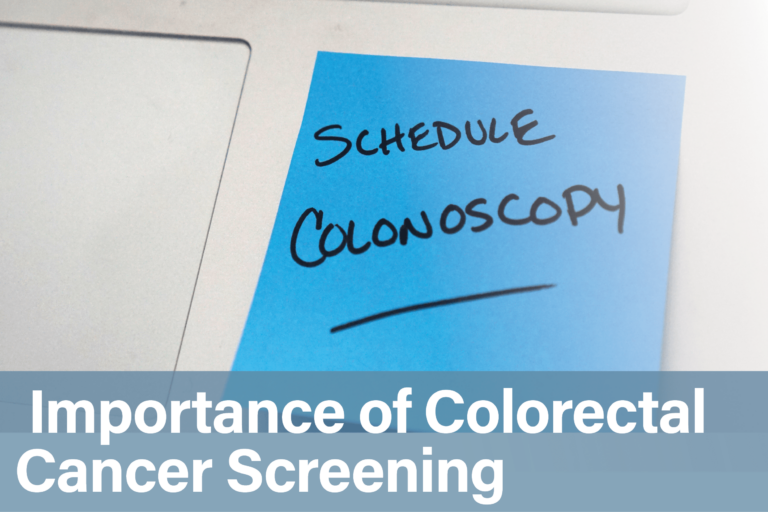
Colorectal cancer screening is crucial for early detection and improved outcomes. Here’s why it matters and the screening options available: 

Why Screening Matters: 

  1. Early Detection: Detecting colorectal cancer early increases treatment success and survival rates. 
  1. Prevention: Screening can identify precancerous polyps, allowing for their removal before they become cancerous.   

Screening Options: 

Several screening tests are available for colorectal cancer and are recommend if you are 45 and average risk. If you are high risk, or have family history, your doctor might recommend earlier screening. Please be sure to discuss screening recommendations with your physician.  

  1. Colonoscopy: A colonoscopy is considered the gold standard for colorectal cancer screening. During this procedure, a flexible tube with a camera is inserted into the colon to examine the lining for abnormalities or polyps. If polyps are found, they can be removed during the procedure. 
  1. Fecal Occult Blood Test (FOBT) and Fecal Immunochemical Test (FIT): These tests detect blood in the stool, which can be a sign of colorectal cancer or precancerous polyps. They are non-invasive and can be done at home by collecting stool samples and sending them to a lab for analysis. 
  1. Stool DNA Test (FIT-DNA): This test combines the detection of blood in the stool with the analysis of DNA markers associated with colorectal cancer. It can also be done at home by collecting stool samples and sending them to a lab for analysis. 
  1. Flexible Sigmoidoscopy: Similar to a colonoscopy, a sigmoidoscopy examines the lower part of the colon for polyps or abnormalities. However, it does not examine the entire colon. 
  1. CT Colonography (Virtual Colonoscopy): This imaging test uses a CT scanner to create detailed images of the colon. While less invasive than a traditional colonoscopy, it still requires bowel preparation and may miss small polyps. 


Regular screening for colorectal cancer is essential for early detection, improved outcomes, and prevention. Talk to your healthcare provider about which screening test is right for you based on your age, risk factors, and medical history. Remember, early detection saves lives.

Contact Us

Other Articles

Like What You See? Share With A Friend!

Latest Doctor's Blog Articles

Protect Your Skin Today for a Healthier Tomorrow

Skin cancer is one of the most common cancers worldwide, but the good news is that it’s also one of the most preventable. With the right habits and awareness, you can significantly reduce your risk and keep your skin healthy for years to come. While early detection plays an important role in successful outcomes, prevention is the first and most powerful step.

Read More »

Prostate Cancer: Understanding Risk and Screening

At Rocky Mountain Cancer Centers, we are proud to serve our local community with high-quality, patient-focused care tailored to individual needs.

Prostate cancer is one of the most common cancers in men, but early detection can greatly improve outcomes.

Read More »
skin cancer awareness image

What to Watch For and Why Early Detection Matters

At Rocky Mountain Cancer Centers, we are proud to serve our local community with high-quality, patient-focused care tailored to individual needs.

Skin cancer is one of the most common cancers—but also one of the most treatable when caught early.

Read More »